The digital twin for every pet.
Bring health records, nutrition, measurements, and daily observations into one evolving history. Build the context for more informed care.
Public beta connects records and daily care. Computational prediction and simulation remain in development.
Managing pet health
can feel overwhelming.
Your pet's health is a story, not a snapshot.
- At the clinic
- Examinations, laboratory results, diagnoses, and treatment plans.
- Between visits
- Appetite, activity, weight, medication records, and changes noticed at home.
A connected history brings these observations together for the next care conversation.
The Challenge
Useful observations often remain disconnected.
Nutrition, activity, weight, and clinical history each offer part of the picture. Recording them over time helps reveal changes and gives everyday observations a place alongside veterinary care.
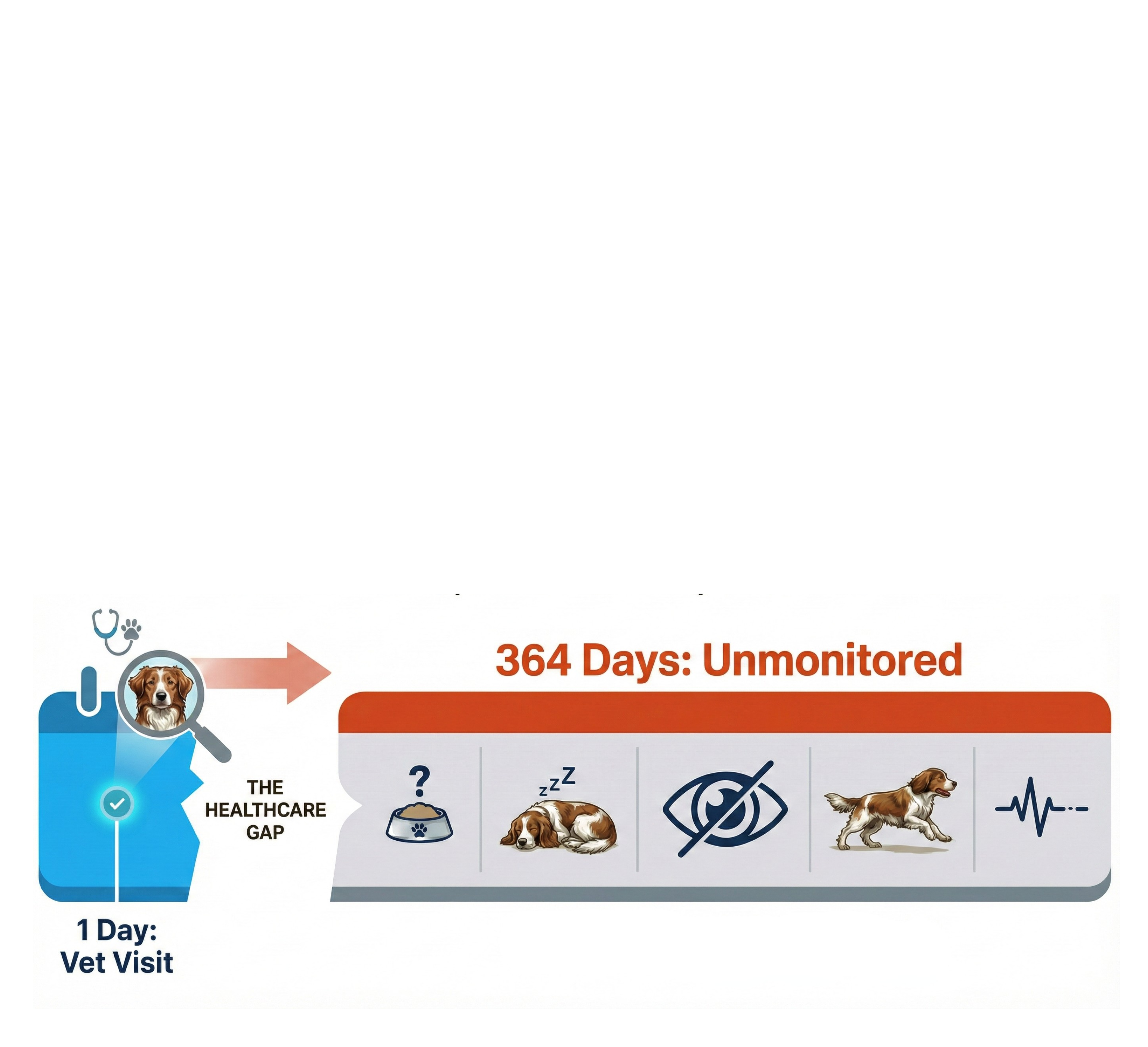
Between veterinary visits
Gaps in personalized care can lead to missed warning signs, costly surprises, and unnecessary worry.
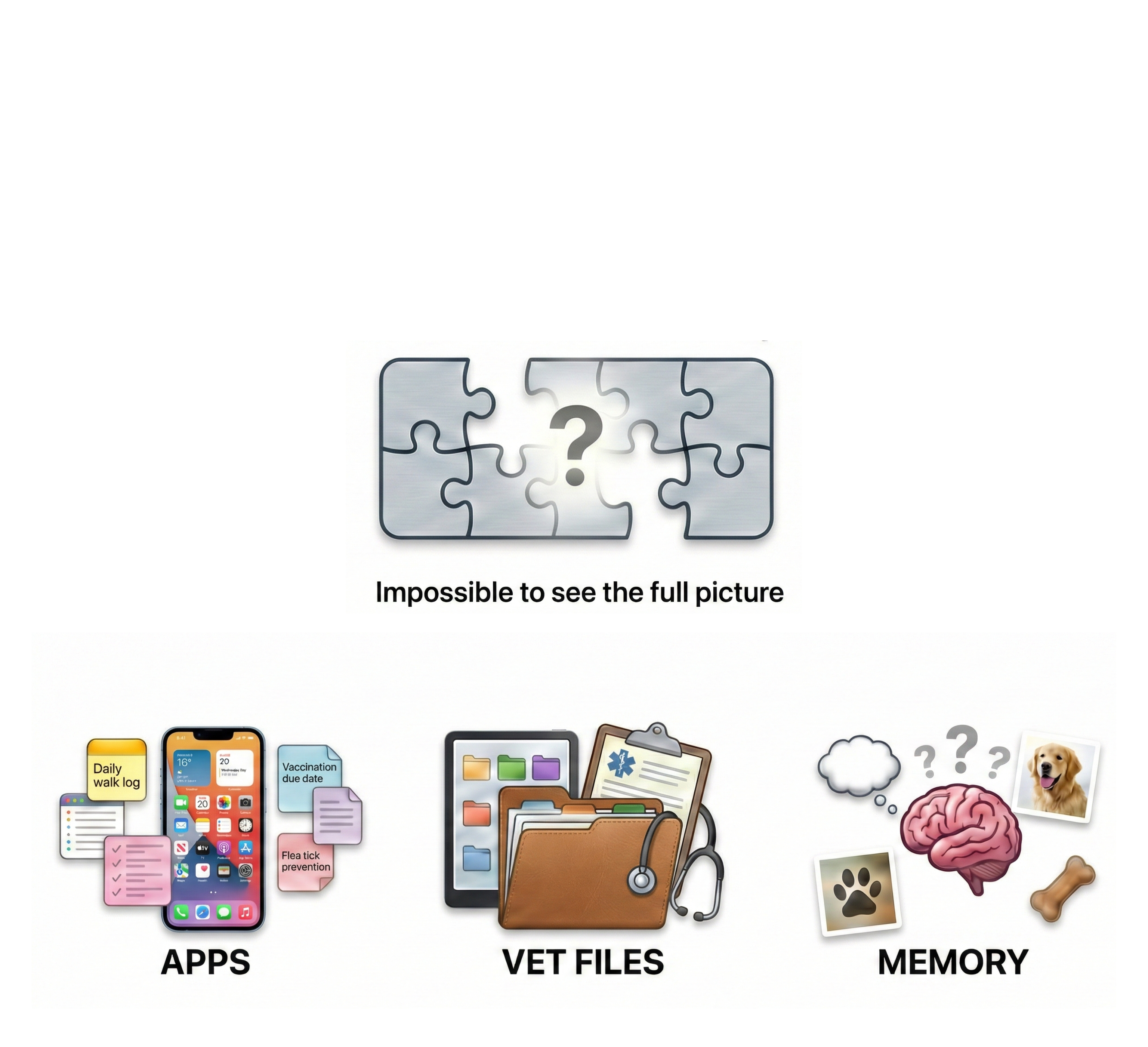
Fragmented Records
Records spread across apps, veterinary files, and memory make change harder to follow.
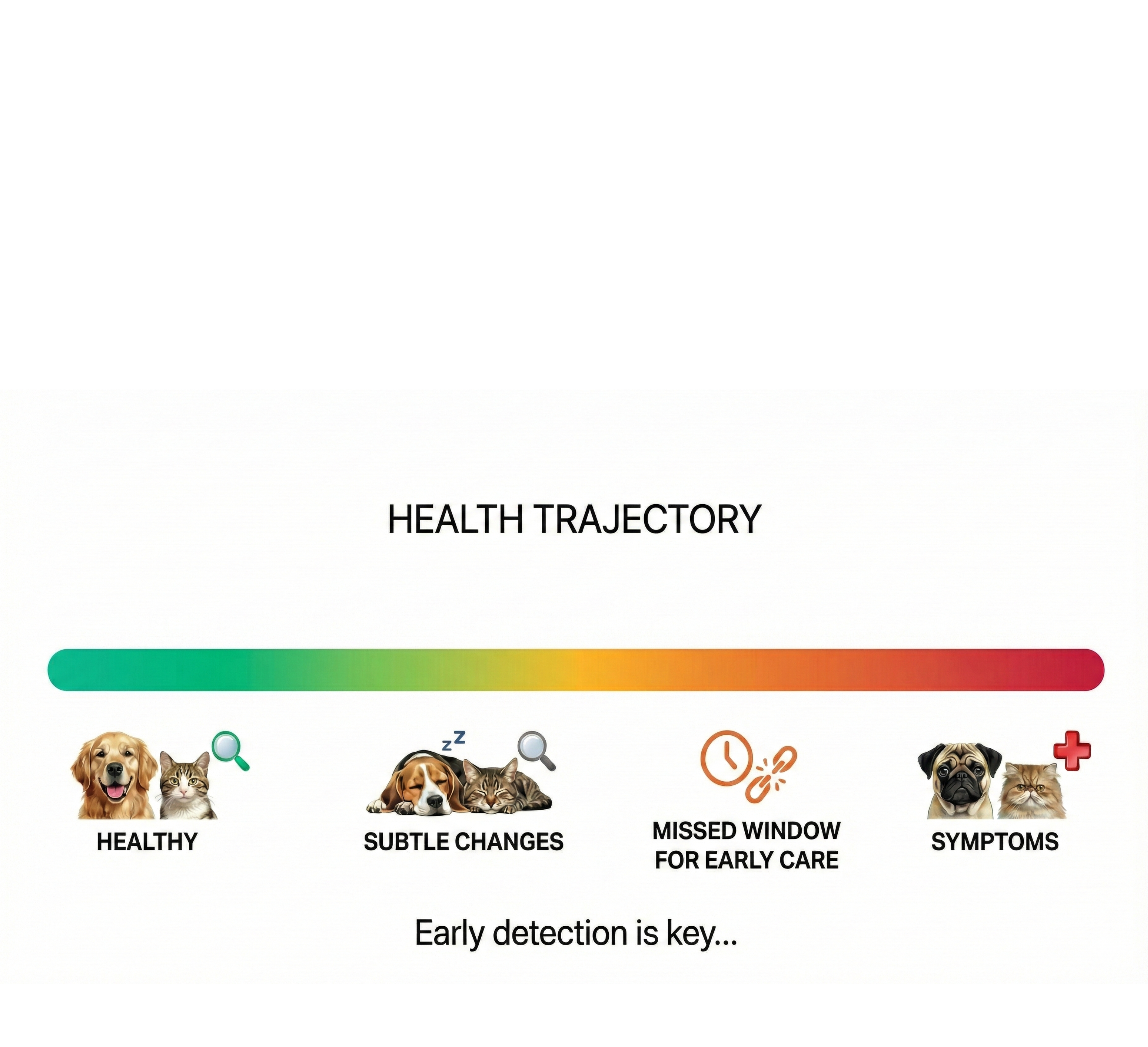
Subtle Warning Signs
Changes in appetite, activity, and behavior are easier to discuss when observations are recorded over time.
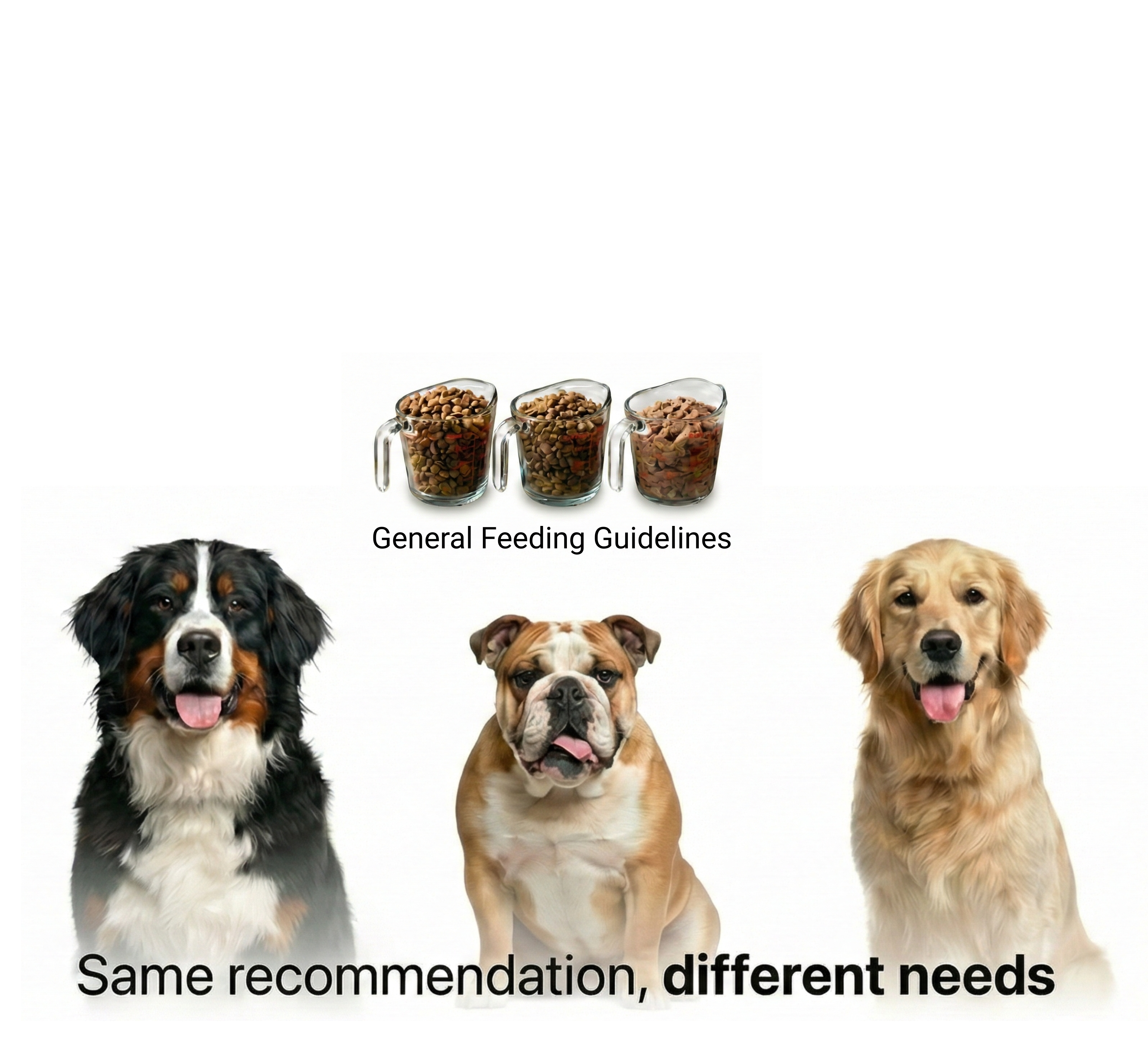
One-Size-Fits-All
Generic recommendations that miss your pet's unique biology, breed predispositions, and individual health trajectory.
It’s not just care.
It’s timing.
Some health changes develop gradually. A recorded baseline provides context. Observations over time can support a clinical assessment.
Warning Signs
Wait for Symptoms
Detect the Drift
The Nutrition "Black Box"
Pet parents make daily decisions about food, portions, and activity, but without visibility into individual metabolism, those inputs disappear into a black box.
Guesswork at the Foundation
Pet parents are left guessing at the most fundamental inputs:
Nutrition is the most essential and most modifiable driver of lifelong health. Yet today, it's managed with averages, assumptions, and outdated heuristics.
Health Impact
Systemic Inflammation
Excess fat is not just extra weight. It becomes biologically active tissue releasing inflammatory signals that disrupt metabolism.
Learn moreFeeding guidelines and online advice treat nutrition as static, even though each pet processes energy differently.
Energy Mismatch
Daily Caloric Surplus
Metabolic Strain
Inflammation • Fat Accumulation
Chronic Disease
Visible Symptoms
of dogs are overweight
Connect the observations.
From Disease Diagnosis to Optimal Healthspan
Optimal
RangeLongitudinal Context
A structured history of available records and daily observations
Metabolic Intelligence
Review food intake alongside weight, body condition, and activity
Illustrative energy estimate
BREED PROFILE
Optimized
ACTIVITY LEVEL
Active
AGE FACTOR
Adult
WEIGHT STATUS
Ideal
HEALTH SCORE
94/100
RISK LEVEL
Low
Your pet's unique biological fingerprint
N-of-1 Modeling
A developing model informed by the individual pet’s history
A clearer foundation for daily care.
Four ways to bring everyday observations into a more useful health history.
Changes over time
Track changes in weight, appetite, activity, and daily measurements alongside the rest of the record.
Use recorded changes to prepare focused questions for your veterinarian.
Personalized Nutrition
Review food intake in the context of body condition, activity, life stage, and veterinary guidance.
Adjust care from observed response over time, rather than treating an estimate as a fixed requirement.
Longitudinal Visibility
Keep available records and observations in one history that you can share with your veterinarian.
Bring relevant details to care conversations without reconstructing them from memory.
Continuity of care
Keep a record of care decisions and the changes observed afterward.
A useful history supports follow-up and shared decisions with your veterinary team.
THE THESIS
Evolution provides context.
Biology shapes care. Care shapes lifespan.
Dogs display the greatest phenotypic diversity of any mammal, a result of thousands of years of selective breeding that produced incredibly diverse genetic architectures creating distinct metabolic traits, energy demands, and disease susceptibilities.
The Reality
Your pet's biology is unique.
Their care should be too.
Population guidance provides a starting point. An individual feeding plan also needs body condition, activity, life stage, medical history, and the response to feeding over time.
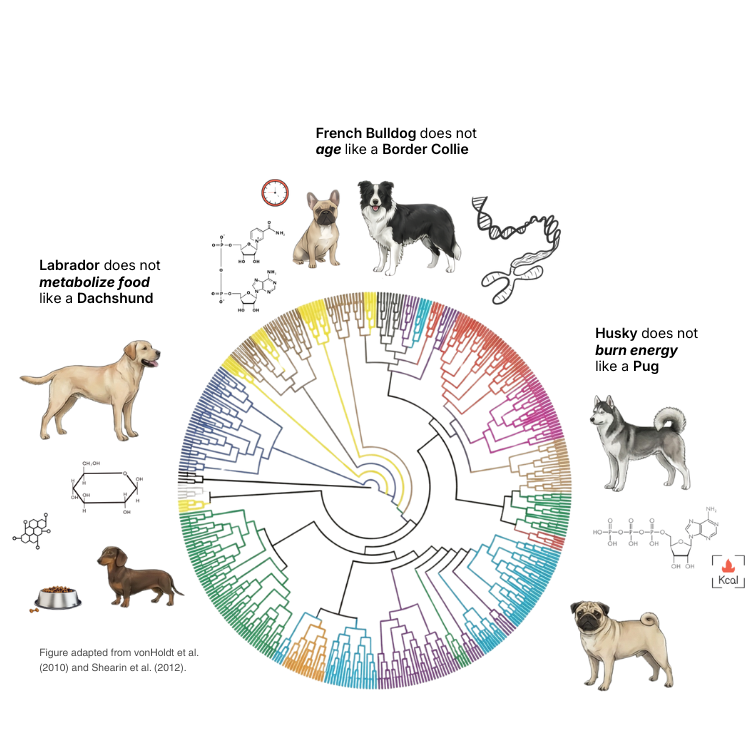
Biological background adds context
Breed and population research provide context. An individual animal’s measurements, clinical history, and available genetic results add the detail needed for an informed discussion of care.
Explore the Evolutionary PerspectiveAn individual history.
A developing model.
Available records establish the history. Computational models are being developed around that individual context.
Adaptive health
My Pet's Digital Twin™
A connected health history, with individual biological models in development.
An Evolving Health Story
Understanding every layer.
A pet’s history brings together biological background, recorded measurements, and the context of everyday life.
Biological Foundation
Breed traits, genetics, age, and physiology establish a personalized baseline.
Continuous Health Signals
Nutrition, weight, activity, and daily observations help establish patterns over time.
Adaptive Intelligence
Computational models are in development to study how these observations relate to health over time.
These layers provide context for an individual history; no single measurement explains an animal’s health.
Build a useful history. Records of meals, activity, and changes over time give you and your veterinary team more context for care.
Research & development
Biology informs the model. Evidence must establish its value.
Longitudinal research helps explain why nutrition, body condition, and observations over time matter. Applying that knowledge to an individual animal requires its own clinical context.
For example, a controlled feeding study followed 48 Labrador Retrievers and reported longer median lifespan in the restricted-feeding group. That finding describes a study cohort; it is not a demonstrated outcome of using XPET.
Kealy et al., JAVMA (2002) (opens in a new tab)- Available today
- Organize health records, measurements, nutrition, and daily observations around the individual pet.
- In development
- Computational models that connect biological context with a pet’s history over time.
- To establish through validation
- Predictive accuracy, simulation performance, and benefits for veterinary decisions. These are development goals, not established capabilities of the public beta.
Who XPET Is For
Built for Pet Parents.
Useful in care conversations.
Pet Parents
Who want more than reactive care
Veterinarians
Seeking longitudinal context
Partners
Advancing preventive animal health
If you believe pets deserve the same proactive health intelligence humans are beginning to expect—XPET was built for you.
To make each pet’s health history more connected, understandable, and useful throughout their life.
Start your pet’s health story.
Create your account to bring your pet’s health records and daily care together.
Create Account